Earth’s Carrying Capacity

Have we reached the Earth’s carrying capacity?  Well, perhaps I can offer my answer to this question by first defining carrying capacity and then establishing the Earth’s carrying capacity as assessed under current natural and social conditions.

As defined in The American Heritage® Dictionary of the English Language, Fourth Edition:

  • car·ry·ing (kār’ē-ĭng) ca·pac·i·ty (kə-pās’ĭ-tē) n.  
    • The maximum number of persons or things that a vehicle or a receptacle can carry: a van with a carrying capacity of 12.
    • Ecology The maximum number of individuals that a given environment can support without detrimental effects.

As explained by the Carrying Capacity Network, a watchdog organization of sorts, presenting “Real Solutions for America’s Problems”:

A common fallacy is to equate existing and seemingly open or “unused” spaces with the kind of resources and ecologically productive land needed to support human life under modern conditions. In fact, the criterion for determining whether a region is overpopulated is not land area, but carrying capacity.

Carrying capacity refers to the number of individuals who can be supported in a given area within natural resource limits, and without degrading the natural social, cultural and economic environment for present and future generations. The carrying capacity for any given area is not fixed. It can be altered by improved technology, but mostly it is changed for the worse by pressures which accompany a population increase. As the environment is degraded, carrying capacity actually shrinks, leaving the environment no longer able to support even the number of people who could formerly have lived in the area on a sustainable basis. No population can live beyond the environment’s carrying capacity for very long.

The average American’s “ecological footprint” (the demands an individual endowed with average amounts of resources, ie, land, water, food, fiber, waste assimilation and disposal, etc. puts on the environment) is about 12 acres, an area far greater than that taken up by one’s residence and place of school or work and other places where he or she is.

We must think in terms of “carrying capacity” not land area. The effects of unfettered population growth drastically reduce the carrying capacity in the United States.

In a post titled “Living Above the Line,” Environmental Research Foundation Precaution Reporter, Peter Montague, reiterated the assessment by the United Nations Environment Programme‘s fourth Global Environmental Outlook Report (GEO-4) in order to answer this question

…GEO-4 concluded that we humans presently require 22 acres per person to support our global average lifestyle — but, the report said, Earth has only 15 acres per person available.

In other words, we have already exceeded the Earth’s “carrying capacity” — it’s capacity to “carry” (or support) 6 billion humans. And the human enterprise is poised for a massive spurt of economic and population growth — expected to raise our numbers to 9 billion by roughly mid-century and to double the size of the human economy every 23 years….

Looking at the findings for the world as a whole presented in GEO-4, taking into consideration my own personal results I found in the ecological footprint quiz, and taking into consideration all of the other factors we have been discussing in People and the Environment lectures, such as the rate at which the Earth’s population is doubling, it is hard to argue against the fact that not only have we reached the Earth’s carrying capacity, but for many reasons we have long since exceeded the upper limits of population the global ecosystem can support.  However, I hope that we have recognized these statistics in time to correct the situation.  I believe the global society’s recognition of the mismanagement of our natural capital in time to continue to make strides toward a sustainable society, and setting and attaining hard and fast goals to meet sustainability, may provide the hope for our future and our grandchildren’s future.

My Ecological Footprint

After retaking the quiz to determine my personal footprint using the ecological footprint calculator on the Global Footprint Network website, there is still an obvious need for me to change my ecological footprint.  I took another run through the quiz because after receiving a score of needing 10.3 planet Earths “if everyone lived like me” on the Basic Information version of the quiz, I felt that there were many aspects of my lifestyle I could not express in that basic form.  Thus, the basic format did not make considerations for certain distinctions which would more accurately define my footprint, such as the fact that I rarely buy meat or fish from a grocery store.

Almost all of the meat and fish I prepare at home are a product of my personal hunting and fishing harvests.  These are wild animals that are not costing the Earth in the usual, and more expensive, way a farm raised animal would.  Yes, I do expend fossil fuel in pursuing them and I do puchase goods that are the tools for my harvest, but there is no way wild game costs the Earth as much natural capital as farm raised animals  

Retaking the quiz in the Detailed Information format made an enormous difference in my footprint.  The detailed format brought my ecological footprint down to the need for 4.4 planet Earths “if everyone lived like me.”  According to this figure, it requires 19.7 acres of the Earth’s productive area to support my lifestyle.  I still have some reservations about not being able to go even more in depth with the way I feel I work to conserve and preserve our natural capital, and with the assumptions that are made because of the country in which I live.  I agree that America is a throw-away society, but, like in all aspects of society, it is not fair to stereotype by nationality.  Also, the fact that my footprint jumps from 10.3 to 4.4 between the two versions of the quiz makes me hesitate some as well about the accuracy of the final tally.

However, for the simplicity of the quiz, I realize some assumptions must be made.  That being said, there are still changes I need to make to improve my ecological footprint, obviously, because we don’t have 4.4 planet Earths – we have one.  If I want this one planet to be a livable place for my children’s children and grandchildren, then I need to adjust my worldview from a mix of planetary management and stewardship to at least a mix of stewardship and environmental wisdom if not making a total lifestyle commitment to environmental wisdom is not possible.

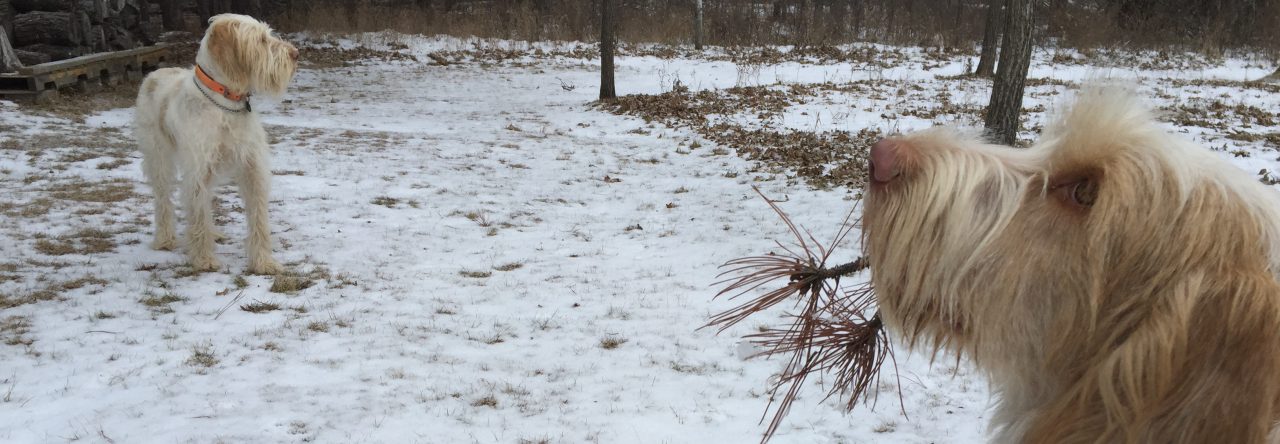
I can make changes to certain aspects of my lifestyle that will benefit my footprint, such as purchasing more organic foods.  I like my toys and gadgets, but I have subdued my obsession with these things.  When the urge arises in the future, the better option would be to buy used.  I am already a diligent recycler inside and out of the home, but there is still much more I can do to reduce the amount of unnecessary waste and the amount of natural capital that is necessary to produce, dispose, or recycle it.  I can use less fossil fuels in my home and on the road by using my mountain bike for the commute, keeping an even closer eye on my energy saving thermostat, reducing the amount of time energy spent manicuring a park like acreage and allowing the growth of more native plants, and substituting the motorcycle for the truck on longer journeys – now if I only had a sidecar for the dog!  I draw the line at my house though – because I like it.  I won’t trade it in to pitch a tent somewhere just because the dog and I are the only ones using this space.  I am making the effort to consolidate more individuals under the same roof however, so I guess that is a work in progress.

Hobson Forest

Hobson ForestOur field trip to Hobson Memorial Forest on Thursday offered a chance to spend part of the morning in nature’s classroom.  Prior to the field trip, I didn’t know that BSU owned a piece of the forest, so it goes without saying that I had never been there.  But any day in the woods is a good day.

After a short drive to the forest northeast of Lake Bemidji and a short hike through the rustic log cabins area on our way to the amphitheater for a quick briefing, we were turned loose to explore in solitude.  Leaving the amphitheater area, I anxiously looked for a way to separate myself from the group and an alternate exit down a game trail helped me slip out of sight within seconds of departure.  We had a half hour.  I didn’t have a watch.  There would be a whistle when time was up.  I was soon out of whistle range.  Now, what natural wonders could I find?

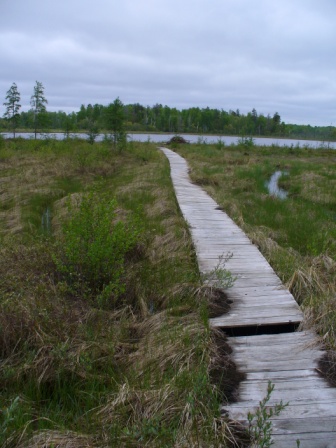
Before I could escape deeper into A Beaver Boardwalkthe woods, the ridge trail I followed dropped into a clearing where a boardwalk snaked through a bog leading to a beaver lodge.  It looked as though the beavers could have designed its route themselves – easy access to the shoreline timber, but a long drag back.  I didn’t dare pay a visit; I was unannounced and the first few steps down the boardwalk looked precarious at best. 

Back up the ridge, I came across a deer enclosure where university scientists study the affects of the white-tail herd outside the enclosure versus the protected vegetation inside the enclosure.   Time to get off the game trail, and deeper into the woods.  I cut cross-country between the ridge and swamp.  Weaving through deadfalls and blowdowns in the soft soil just above the water table, I came across a favorite perch of a resident squirrel where winds had found the breaking point of an immature oak.  No chatter of discontent with my presence, but it left behind part of its cache for later, or for better feasting elsewhere.

Squirrel LeftoversWorking away from the water and into the woods, I interrupted two male American Redstarts squabbling over something so intensely that their game of give and chase brought their course within inches of me.  In fact, I had to side-step them as they dove through the underbrush.  A second later, I gathered myself and my camera to capture brilliant black and blaze woods warblers, but they called a cease to their dispute to elude their intruder.

I must have hit some tall grass somewhere because a half dozen wood ticks were making their way north along my legs looking for a warm spot to engorge with indulgence. 

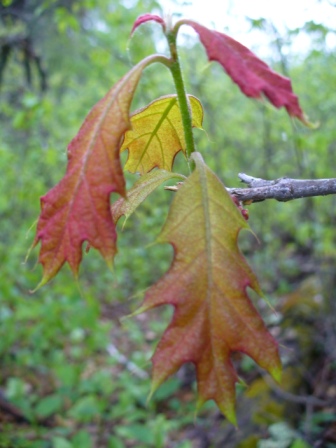
The forest, bursting with growth from a late spring of blanketing snow and soaking rains, created such a fluorescent green, I strained to remember the last time I had seen as rich a color.  Tiny pops of lavender and red were revealed along the way deeper into the woods.  The whole place Wildflowerssmelled washed clean by the rains the day before.  The rains had also left the forest floor damp, soft, and quiet, perfect hiking conditions for discovering something with the element of surprise.

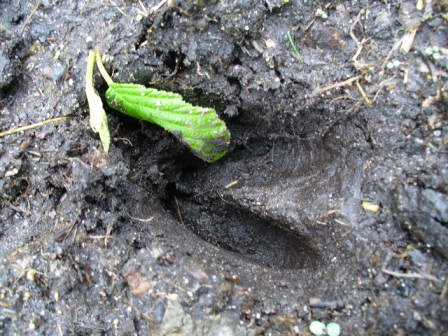
Deeper into the older growth trees and thicker underbrush I lost the cool breeze of the morning and waves of mosquitoes began to sing into my ears.  I’ll cross one more ridge and then I’ll turn back, or maybe the next ridge after that.  I don’t want to turn back.  I have to have been gone for a half hour, but I’ve only just begun to explore this place.  To turn back now would be anticlimactic.  I didn’t have enough time to even begin to map things out in my head.  But fresh white-tail tracks told me it was Burst of Redtime I make tracks myself before someone sends a search party.

I picked up another class member along my way back who had neglected any recognition of a watch as well.  Together, we rendezvoused with one of the instructors who was on his way back from looking for stragglers at the amphitheater.  I never heard a whistle.  We were the last ones back.  Nearly left behind.  I took only photographs, and left only footprints, as the saying goes, but my senses were still computing all the information they had just received.

I wonder what was over that next ridge?Fresh Tracks