

 On Tuesday we took a little stroll around campus discussing some of the ways Bemidji State University demonstrates its responsibility as an institution for higher education by creating an educational environment that pledges to work towards sustainability. As a public educational institution producing tomorrow’s leaders, the university needs to set an example for the generations of the current and future environmental stewards it prepares for graduation into society. If our society is to change its practice of mismanagement of our natural capital, we have to learn how to change. By establishing educational resources for the study of how we can successfully become a sustainable society, Bemidji State University joins a commitment to environmentalism with other leading institutions and organizations working to provide a healthier future for our local and global ecosystem. The president of the university, Dr. Jon Quistgaard, promises this obligation by uniting with over 350 university presidents and chancellors in over 40 countries around the world in the Association of University Leaders for a Sustainable Future through the Talloires Declaration, and the university community expects a proposal to further this promise with a future signing of the American College & University Presidents Climate Commitment.
Other examples of Bemidji State University’s commitment to an ecocentric environmental worldview are detailed in these press releases from the university on November 29, 2007:
- Otter Tail Power gift completes sustainable campus endowment
- Bemidji State University named a Green Power Partner
Other campus projects I find to be equally important, if not on the same scale as the above mentioned movements of environmentalism, then on the measure of what can be done by the individual or small group to renew and improve our campus and community are: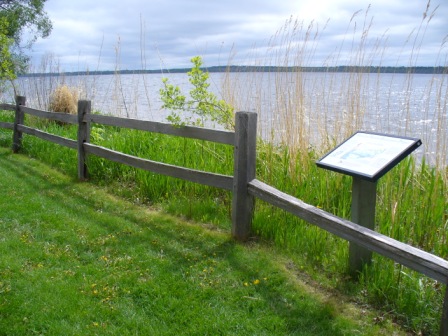
- The Shoreline Habitat Restoration Project performs the following benefits for our local ecosystem and our downstream neighbors:
- Restores a buffer zone using native plants
- Provide habitat for a wide variety of wildlife
- Filter out pollutants and runoff that degrade water quality
- Prevent shoreline erosion by absorbing wave action
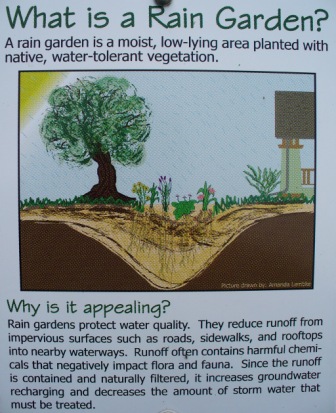
- The implementation of a Rain Garden to reduce runoff and naturally filter storm water.

- Landscaping with Native Plants such as a Butterfly Garden provide multiple benefits:
- Native plants have evolved and adapted to local conditions over thousands of years. Once established, they require no irrigation or fertilization. They are resistant to most pests and diseases, and require no mowing. Thus, native plants, conserving water and fossil fuels, and requiring less work to maintain, are less costly in the long term.
- Native plants have longer root systems than non-native species which helps rainfall percolate into the soil, reducing erosion and runoff, and recharging ground water and improving water quality.
- Native plants provide food and shelter for birds, butterflies and other desirable wildlife.
 This little tour around campus inspired me to begin planning some improvements to my own property’s landscape. I have always favored native plants for their simplistic beauty and minimal maintenance. I especially have affinity for trees. After discussing the question of why we mow and manicure our lawn with Professor Bailey-Johnson when a thoughtfully landscaped native plant ecosystem provides habitat for beneficial species, such as dragonflies – which prefer longer grasses while mosquitoes do not and dragonflies eat mosquitoes, I would rather have more habitat and wildlife on my property than an aesthetically pleasing keeping-up-with-the-Jones’-look. Also, there is the consideration of time spent mowing – three hours per tour for me, but I have plans to cut that in half – and the incredible fact that 5% of all emissions in this country come from lawnmowers. I mean really – why?
 Liberty Pines Ranch