
Recovery Efforts Making Steady Progress

Whitewater State Park manager Garry Barvels reports that the recovery efforts at Whitewater State Park are making steady progress in a news release from the Minnesota Department of Natural Resources.  The park sustained over $4 million in damages during a flash flood last August.  A Grand Reopening Celebration is set for June 7, but parts of the park will begin reopening March 1.

There are two crucial reopening dates for my spring wild turkey hunt: 

  • April 1, when a limited number of the parks trails and streams will open for the catch and release trout fishing season.
  • April 11, when the Upper and Lower Cedar Hills Campgrounds will reopen.

Looks like there will be camping and trout fishing mixed in with our spring turkey hunt this year after all, and according to their upcoming events we can even do a little maple syruping.  This park is truly one of my favorite places in the state.  My reservations are made and I am excited to see the results of all the hard work by the recovery team and I applaud their efforts.

Our local Headwaters Gobblers Chapter of the National Wild Turkey Federationwill be holding their fundraiser banquet this Thursday, February 28th, at 5:30 PM at the Eagles Club in Bemidji, MN.  Get out and have some fun and support the gobblers!
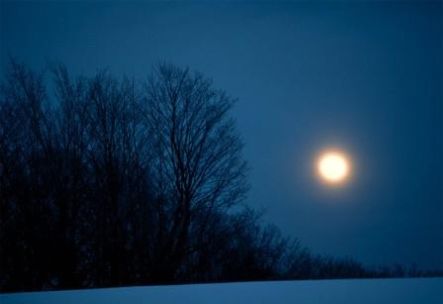
Total Lunar Eclipse: February 20, 2008

Winter MoonThere is a total eclipse of the moon tonight visible from most of North America (where most of my constituency is located).  Mid-eclipse should be about 9:26pm Central Time.  It should be worth checking out, and even more impressive if you have a telescope or camera worthy of the show.  Let me know if anyone gets any good pictures.  Iwould love to see them.  I pulled the following information off of the NASA website:

A total eclipse of the Moon occurs during the night of Wednesday, February 20/21, 2008. The entire event is visible from South America and most of North America (on Feb. 20) as well as Western Europe, Africa, and western Asia (on Feb. 21). During a total lunar eclipse, the Moon’s disk can take on a dramatically colorful appearance from bright orange to blood red to dark brown and (rarely) very dark gray.

An eclipse of the Moon can only take place at Full Moon, and only if the Moon passes through some portion of Earth’s shadow. The shadow is actually composed of two cone-shaped parts, one nested inside the other. The outer shadow or penumbra is a zone where Earth blocks some (but not all) of the Sun’s rays. In contrast, the inner shadow or umbra is a region where Earth blocks all direct sunlight from reaching the Moon.

If only part of the Moon passes through the umbra, a partial eclipse is seen. However, if the entire Moon passes through the umbral shadow, then a total eclipse of the Moon occurs. For more information on how, what, why, where and when of lunar eclipses, see the special web page lunar eclipses for beginners.

The last total lunar eclipse visible from the entire continental United States occurred on August 28, 2007. North Americans will have their next opportunity to see a total lunar eclipse on December 21, 2010.

Total Eclipse of the Moon